But also, South America has a lot of borders in rivers that cut intermingled populations. The difference is that we were the ones that drew them (or asked some uninvolved 3rd party to draw them).
I mean “we” are the descendants of both colonizers and colonized.
My grandmother was (at least phenotypically) fully indigenous, my grandfather was (at least phenotypically) fully European. But both were born in Colombia.
It’s very hard to draw a clear line between who is descendant of colonizer or colonized because of how much interracial rape, marriage, trade, business and everything in between there was.
We shouldn’t whitewash our past (many people do), but depicting all South Americans not actively living in native reserves as fully European or fully indigenous is very misinformed or downright malicious at best.
The prevailing narrative in many South American countries is that either we were horribly oppressed and abused by the Spaniards / Portuguese, basically appropriating the plight and history of natives, or that we came on boats from Europe and erased natives, which invisibilizes their story and a huge part of our own history and ancestors.
South America is messy like that. And I have no doubt that if another great war breaks out in Europe, we will keep receiving European immigrants as we always have.

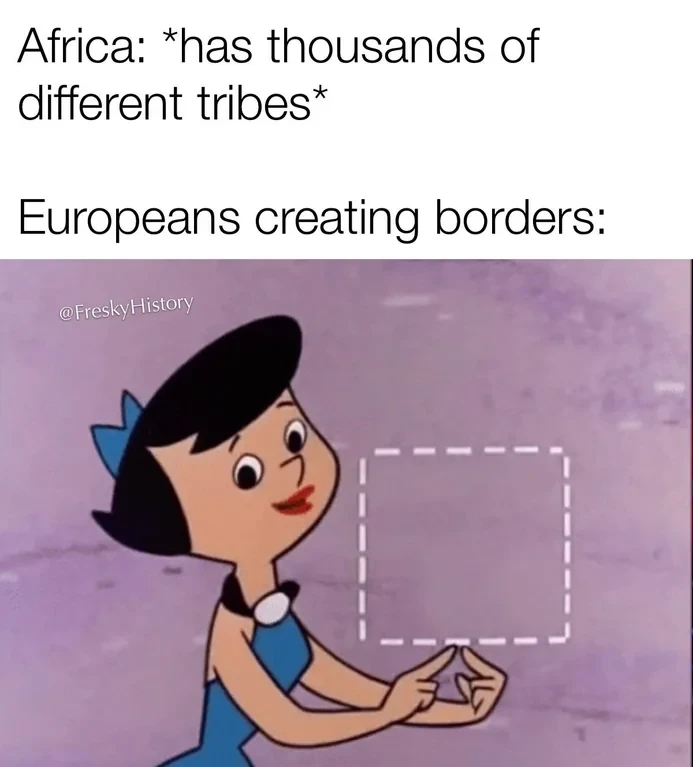
Yeah, that’s a really bad example.
But also, South America has a lot of borders in rivers that cut intermingled populations. The difference is that we were the ones that drew them (or asked some uninvolved 3rd party to draw them).
It’s ‘we’ because you are the decendants of the colonizers no?
I mean “we” are the descendants of both colonizers and colonized.
My grandmother was (at least phenotypically) fully indigenous, my grandfather was (at least phenotypically) fully European. But both were born in Colombia.
It’s very hard to draw a clear line between who is descendant of colonizer or colonized because of how much interracial rape, marriage, trade, business and everything in between there was.
We shouldn’t whitewash our past (many people do), but depicting all South Americans not actively living in native reserves as fully European or fully indigenous is very misinformed or downright malicious at best.
The prevailing narrative in many South American countries is that either we were horribly oppressed and abused by the Spaniards / Portuguese, basically appropriating the plight and history of natives, or that we came on boats from Europe and erased natives, which invisibilizes their story and a huge part of our own history and ancestors.
South America is messy like that. And I have no doubt that if another great war breaks out in Europe, we will keep receiving European immigrants as we always have.
Makes sense, thanks
Eh… You could bother to learn one thing or another before making assumptions.