Imagine a galleon full of 16th century Spaniards dropped anchor at the mouth of the Nile in 2600 BCE and rode into Khufu’s Memphis. That’s pretty much exactly what went down in what is now Mexico City.
This bears so little resemblance to what happened that it’s essentially 1500s Spanish propaganda. Archaeological remains from first contact show mass civil uprisings of peoples who had been conquered by the Aztecs prior to Spanish contact, not OP European kill bots plowing through thousands of Native zombies. You fire that musket once and then what are you doing for the next 30 seconds while the other 5000 screaming warriors are still headed over to kill you? That’s why they had to flee Tenochtitlan until the plague they brought with them did the work for them. Even then it still took them 3 months to retake the city; pretty poor performance all things considered.
Conquistadors and Aztecs by Stefan Rinke and When Montezuma Met Cortez by Matthew Restall are good reads. And if you feel like waiting until tomorrow I can access my school stuff and tell you the name of a good documentary on it, but for the life of me I can’t remember or find the title right now.
Brain fart, the documentary I was thinking of was actually about the Incas! But it’s the same time period, it’s PBS Nova: The Great Incan Rebellion if you can find it anywhere. Unfortunately PBS doesn’t seem to host it online anymore.
Archaeological remains from first contact show mass civil uprisings of peoples who had been conquered by the Aztecs prior to Spanish contact, not OP European kill bots plowing through thousands of Native zombies.
Yes to the first; Spanish conquest would have been impossible under Cortes without the alliance with anti-Aztec native polities. But to the second, the Spaniards were OP killbots - just not enough to take on the entirety of Mesoamerica with an expeditionary force, as is sometimes imagined. At the Battle of Centla, some ~500 Spanish troops under a man with no military experience successfully held off and forced the surrender of several thousand native troops.
Both aztecs and their rivals were decimated by disease, that was the key. Given time, they would have been able to master horse riding, armor and more modern weapons, as they actually did in one of the last battles in Xochimilco just a year after the fall of Tenochtitlan, but too few remained to make a difference.
Both aztecs and their rivals were decimated by disease, that was the key.
In the long-run, in terms of why there wasn’t a resurgence of native polities, sure. In the short-term, the ability of a small expeditionary force of Europeans to exercise disproportionate force (making them a desirable ally for the Aztecs’ enemies) was the key element of the overthrow of the Aztec polity, not disease.
Given time, they would have been able to master horse riding, armor and more modern weapons, as they actually did in one of the last battles in Xochimilco just a year after the fall of Tenochtitlan, but too few remained to make a difference.
I’m unfamiliar with that particular battle, but I’m familiar with later examples. Those weapons also need to be produced in large enough quantities to make a difference, as well as proficiency with them developed. Horse riding is a notoriously difficult skill to master, and metallurgy itself is far from simple. Being able to use captured equipment at a basic level is not nearly the same as being proficient with it, or being able to equip an entire cohesive military unit with it. Disease does not explain battlefield imbalances, which is what I’m referencing.

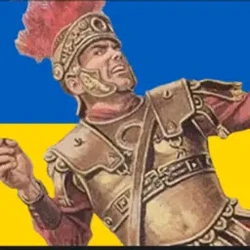

This bears so little resemblance to what happened that it’s essentially 1500s Spanish propaganda. Archaeological remains from first contact show mass civil uprisings of peoples who had been conquered by the Aztecs prior to Spanish contact, not OP European kill bots plowing through thousands of Native zombies. You fire that musket once and then what are you doing for the next 30 seconds while the other 5000 screaming warriors are still headed over to kill you? That’s why they had to flee Tenochtitlan until the plague they brought with them did the work for them. Even then it still took them 3 months to retake the city; pretty poor performance all things considered.
any books or whatever you’d recommend to read up the the subject?
Conquistadors and Aztecs by Stefan Rinke and When Montezuma Met Cortez by Matthew Restall are good reads. And if you feel like waiting until tomorrow I can access my school stuff and tell you the name of a good documentary on it, but for the life of me I can’t remember or find the title right now.
Brain fart, the documentary I was thinking of was actually about the Incas! But it’s the same time period, it’s PBS Nova: The Great Incan Rebellion if you can find it anywhere. Unfortunately PBS doesn’t seem to host it online anymore.
Yes to the first; Spanish conquest would have been impossible under Cortes without the alliance with anti-Aztec native polities. But to the second, the Spaniards were OP killbots - just not enough to take on the entirety of Mesoamerica with an expeditionary force, as is sometimes imagined. At the Battle of Centla, some ~500 Spanish troops under a man with no military experience successfully held off and forced the surrender of several thousand native troops.
Steel, guns, and cavalry are massive advantages.
Both aztecs and their rivals were decimated by disease, that was the key. Given time, they would have been able to master horse riding, armor and more modern weapons, as they actually did in one of the last battles in Xochimilco just a year after the fall of Tenochtitlan, but too few remained to make a difference.
In the long-run, in terms of why there wasn’t a resurgence of native polities, sure. In the short-term, the ability of a small expeditionary force of Europeans to exercise disproportionate force (making them a desirable ally for the Aztecs’ enemies) was the key element of the overthrow of the Aztec polity, not disease.
I’m unfamiliar with that particular battle, but I’m familiar with later examples. Those weapons also need to be produced in large enough quantities to make a difference, as well as proficiency with them developed. Horse riding is a notoriously difficult skill to master, and metallurgy itself is far from simple. Being able to use captured equipment at a basic level is not nearly the same as being proficient with it, or being able to equip an entire cohesive military unit with it. Disease does not explain battlefield imbalances, which is what I’m referencing.