
• 0 Posts
  • 12 Comments
Joined 3 years ago
cake
Cake day: July 4th, 2023

help-circle

  • Twitter, whether we like it or not, is one of the most broadly used social media platforms there is, with some of the furthest reach. Calling it “just a place to waste time” is an ignorant take on it that misses how these platforms become part of communication, career, alerts, friendships, agitprop. For some people, it is “just a place to waste time.” For some, it is much more.

    It is technically correct that there are degrees of how “easy” these examples of things are to “quit”, but as I said before, litigating over which is generally easier to “quit” is missing the point. It’s also something that can be greatly influenced by background/circumstances. The US is easy to leave if you’re wealthy, but the experience is going to be very different if you’re poor. In fact, most things are easy to selectively “quit” if you’re wealthy. It’s the poor people who have to look worse for not uprooting parts of their life on a whim, while well-off people are more easily able to make choices that look conscientious on paper due to the padding they have.

    We could make a chart that tries to go over easiest to hardest things to quit/leave, but it would be misleading if it didn’t take into account the reasons any given person hasn’t done it and the weight the given thing carries in their life. It would also be rather pointless in this context if we weren’t also going over value of quitting. Performative morality isn’t going to help the cause and we can’t assume that leaving a thing to the fascists is automatically good because fascists are currently in charge of it. That reasoning taken to its conclusion leads to giving up. There are contexts boycotts may make a difference, if they’re organized, but I don’t see how people randomly choosing to not do a thing when they get around to it is going to apply consistent pressure with vocal demands.
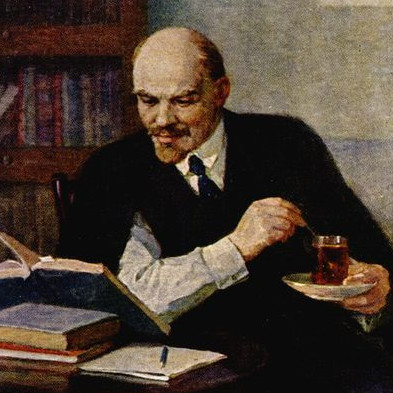
  • Technically correct, but misses the point. It’s the stuff of: “If you haven’t thrown out your cellphone because of its links to capitalist abuse, you deserve to suffer” or something. The Nib was making fun of this years ago, with its comic about “we should improve society somewhat”, “yet you participate in society, curious”. Expecting individuals to voluntarily find their way to the right decisions or else they deserve to suffer has more in common with liberalism than marxism-leninism. Treating individuals as moral failures (and therefore deserving of suffering) because they haven’t rejected every aspect of the society they live in, in order to fight against it, is asinine.

    This isn’t to take it to another extreme and be in support of having no standards at all for how people behave or who we choose to organize with (a context where this matters a lot more). It’s normal to have lines drawn in the sand. But over being on Twitter? For god’s sake, they’re an internet poster, not a war criminal, and you aren’t the same as a Nazi simply by posting on a platform that got taken over by one. That’s why I made the comparison to living in the US. It’s one of the most grotesque empires in human history, but that doesn’t mean everyone who lives there is guilty by proxy with full awareness, complicity, and consent to its crimes. Guilt by proxy is the kind of stuff people use to (flimsily) justify genocide, not the kind of reasoning we need to be getting anywhere near. A person who lives with an abusive spouse is not the same as the abusive spouse. We need to be focused more on solutions than on ivory tower moralizing that conveniently leaves out the ways our own behaviors and associations are linked to the global system of exploitation.


  • I guess how I kinda see it is: act like it’s possible to overcome and organize for it, but also spend some time and energy thinking about what to do if things get even worse and what kind of options are going to be available. Kinda like how sovereign nations spend time on building and improving things, but also spend time on defensive and offensive tools, protocols, and training, and what they do if directly attacked. I don’t think we need to have faith that things will work out, but we do need to have enough belief in the possibility that we’re willing to try. One of the important factors here, I think, is keeping “quantitative changes lead to qualitative” in view. Broadly, it can be easy to look at the big picture, not see the desired progress, and adopt a demoralized view. But every bit of progress is changing something, which can lead to other changes, and we need to know better what is going on in the details so that we can move those details further along. Otherwise, we can wind up more as spectators, as in the “weeks where decades happen” feel where the shift to qualitative takes us by surprise.


  • I did not have that experience, but the first thing I found in searching it on the web was an article about being an entrepreneur, so I can see what the problem may be lol. 💀 Probably gets warped into an individualist/idealist “overcome through power of will” thing. I know when I was doing therapy, I had times it seemed like my therapist was caught up in some thing about individual power of will and not properly acknowledging systemic factors.

    Problem is, a lot of mainstream “advice” is there to redirect you back into integrating with capitalism and away from criticizing it, so they warp frameworks that may otherwise have legitimate aspects to them, toward that purpose.


  • People need to be allowed to make their own mistakes and experience first hand why those are mistakes. Just like China had to first experiment with the bourgeois model during the Republican period before understanding that only the socialist path could lead to liberation, sovereignty and prosperity.

    I may have to reflect on this more, but I’ll still try to write something out and see if that clarifies where my head’s at. I think this is something that gets more complicated than it might first look, especially when we factor in places that are historically colonized/imperialized vs. not.

    In particular, a place that has been exploited by imperialism, it may be all the more imperative that they have a strong native liberation movement, in order to properly shake off the effects of imperialism.

    Then there’s weird shit like the US. It can technically have a strong working class movement without having a strong decolonial, liberation movement. It won’t last that way in the long-term because it’s failing to address the contradictions properly, but it can happen and I believe has in certain ways in the past - where white working class got concessions enough for what they wanted and threw non-white under the bus to do it. With how embedded fascism is in its makeup, and how warmongering it is, it may require intervention at some point to purge it of fascists if local efforts aren’t successful in doing so, if nothing else to keep its neighbors safe from its terrorism and bullying.

    I’m also just not sure the concept of sovereignty works the same way for a country that is founded on settler-colonialism. Indigenous nations need their sovereignty recognized, but the people of the US, that seems more complicated. On the one hand, it’s not like 300+ million people can just up and leave and go back to the countries their ancestors came from. On the other hand, any alternative to the US in the region has to be purged/reeducated of chauvinist, colonial tendencies. There has to be a reckoning with the fundamental asymmetry of being the descendants of settlers on land occupied through genocide, who now greatly outnumber the natives.

    The other thing I think of is like, Palestine for example has liberation forces of its own. Its people have been fighting for decades. It isn’t a question of them being unprepared to fight for, or govern, themselves. They are more than capable of that. The problem is that the occupier has military power that they don’t have and is willing to use it against them in the most ruthless and disgusting ways. This is a scenario where, if there were unified, global liberation forces, they could step in and make the difference, and push out the occupier. It’s kind of a no-brainer if the organized military power was there and it would sound absurd to argue that doing so would be messing up some kind of struggle process for the Palestinian people.

    On the other hand, if the world had such forces and they looked at an imperialized country that is being run by capitalists and struggling to build a socialist movement and said, “We’re going to come in and start shooting”, that I think more fits what we’re talking about in terms of being paternal rather than working in solidarity.

    Last thought is I think it’s worth noting that China did successfully militarily intervene under Mao, when it helped Korean liberation forces push back US forces (whose forces asked for help, it’s also worth noting), and it’s possible that if they hadn’t, the US would have occupied all of Korea and leveraged the positioning to war directly with China. And even if the US had stopped in its hot war there, it still would have been a much worse situation for the Korean people.

    So I would say there is a dramatic difference between allying with existing liberation forces in a country vs. coming in and trying to quickly force development in a paternalistic way. China and its allies could become more equipped to do the first one militarily, but my read (which I think we are more or less in agreement on) is they are trying to minimize the need for it (and the resulting loss of life involved in such direct struggle) by first shifting the balance of power away from imperialism. Edit: And are also trying to ensure that any such effort would not be some over-extending effort they get mired in with no end in sight and undermines their socialist project at home.


  • Maybe there’s experience I’m missing here that informs the take in this clip. Because I’m not following it much at all. I understand the general idea put forth that you can’t force change via magic interventionism brute forcing of material conditions. But I’m not sure I agree with how he explains China’s policy. The way he frames it makes it sound to me something like the argument Christians put forth about “free will”, where they explain away god not interfering to prevent horrible stuff because that would be violating people’s “free will”. But this is obviously bogus because most human laws would consider it a crime if you see something terrible happening, can intervene, and don’t.

    I don’t believe that is what China is doing. The way I understand it roughly (which I will admit could be muddled and missing important elements of it, but I present it for dicussion) is that China does not, and did not when they shifted to “reform and opening up”, believe the conditions are such that intervening more directly will have more gain than loss and so they focused instead on building their productive forces and becoming a production foundation of the world. Thus enabling them not only to dramatically improve the lives of their own people, but also become so integrated that it’s hard (if not impossible by now) for the world capitalist model to isolate and encircle them. This also gave them the power to build material trade ties with other countries and make mutually beneficial deals that could help strengthen those other, otherwise-exploited and isolated countries. Finally, the model of not militarily intervening is directly tied to the legitimization of the multi-polar world model that is situated to replace the dominant imperialist world model.

    I don’t see this as meaning that China or its allies couldn’t ever reach a point where they intervene in some situations, in the capacity of “killing slavers”, so to speak, but that such a stage would have to mean an explicit coalition of countries under the banner of liberation and may not be feasible until imperialism has been defeated, or is much weaker militarily (or until China and its allies are stronger military, or both). While imperialism is dominant, engaging in that capacity means hot or cold war with it and China appears to be trying not to get caught up in such a death by a thousand cuts engagement, where they are contending with all of the imperial tendrils lashing while also trying to manage their own affairs.

    In other words, it comes across to me like this person is presenting ideology resulting from conditions as being ideology that exists in a static, unchanging state in Chinese culture across time. Although I’m sure Chinese culture impacts the development of its particular version of communist theory and practice, that does not mean it exists outside of it as a separate entity that is unchanged by it.


  • I noticed a blind spot in my thinking today. I have a tendency to go along with the mindset of “good and bad drivers” and “there are bad drivers everywhere”, probably because that’s the point of view I’ve encountered my whole life, is putting blame on drivers themselves as individuals. But what of the systemic influence? The conditions of roads and the difficulties of driving competently for extended periods? In all the places I’ve been in or heard about in the US, roads are consistently inconsistent in design. There are repeat patterns, sure, but it’s evident they were not thought through well into the future, especially for the number of cars on them. Nor for various businesses shoving their way in as something people may need to turn to get into.

    So although I’m sure there’s varying levels of skill at driving a car, that doesn’t necessarily even correlate to any given boneheaded decision on the road. People are expected to make snap decisions under stressful and dangerous conditions on overcrowded and convoluted road designs that they are sometimes completely unfamiliar with. Of course it’s going to be bad sometimes. If anything, it’s a wonder it’s not worse than it is.