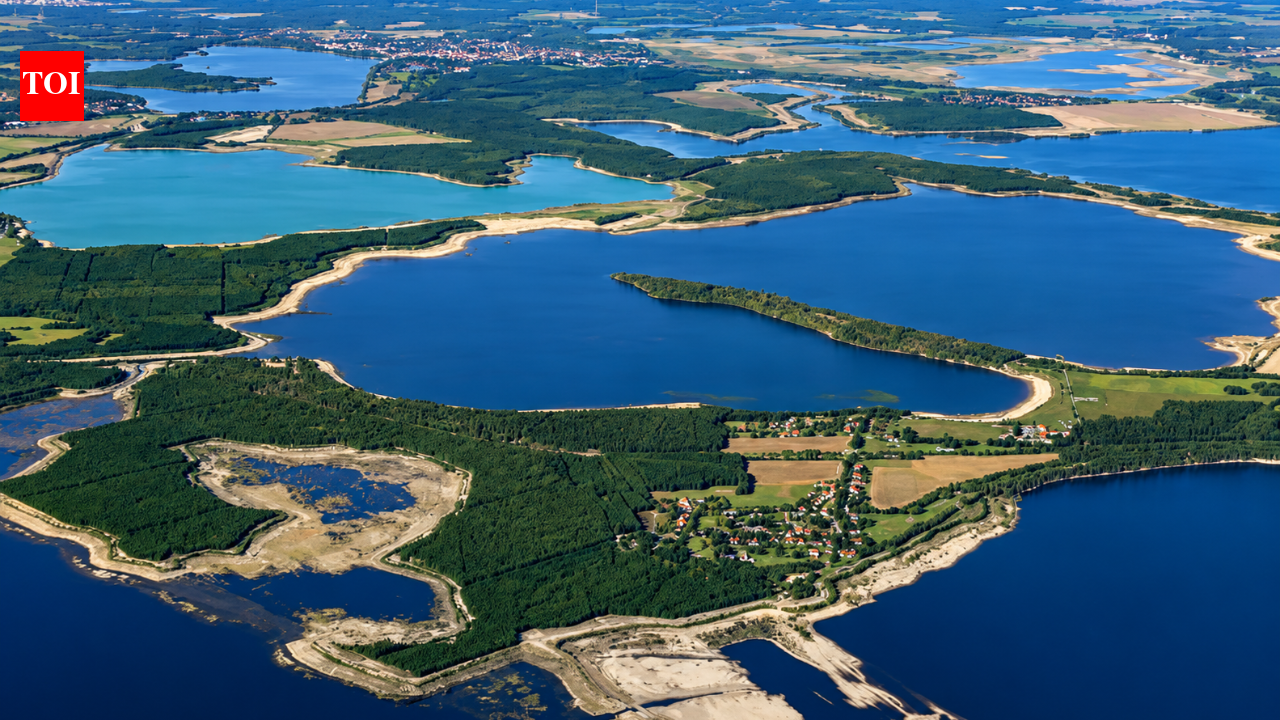
In eastern Germany, enormous pits carved into the landscape by decades of lignite mining are being transformed into a vast network of lakes, wetlands and restored land. The Lusatian Lakeland, spread across Brandenburg and Saxony between Berlin and Dresden, is being created by flooding former open-cast mines and reshaping their surroundings.


That’s correct.
In the case of Lake Geierswalde, liming was carried out to raise the pH level. Lake Senftenberg is unique among post-open-pit-mining lakes in the area in that it was already operated as a reservoir during the GDR era and was therefore flooded with water from the Schwarze Elster River. As a result, less groundwater containing ~~oxalic ~~ sulfuric acid has flowed into it.
What I meant to say with my comment wasn’t that the lakes are bad or have poor water quality… just that their renaturation and restoration to a usable state is an ongoing, active process.
Ah ok. Thanks for clarification!