

I modified the title slightly to make it closer to the sentiment of the article, and to make it less clickbaity. The original title was: “Bernie Sanders has AI policy all wrong”
Here are some excerpts that I thought were interesting:
While she may have been an ally of Sanders on the data center moratorium, Ocasio-Cortez does not seem to have fallen for the deceptive narratives of the AI industry in the way that he has. In November, she warned about the threat of AI psychosis and of the economic damage that could follow the bursting of the financial bubble around AI. She has also been a leader in the effort to give AI deepfake victims the tools to hold perpetrators to account.
In my view, Sanders and Ocasio-Cortez demonstrate two distinct approaches to AI policy motivated by very different understandings of the technology. Sanders is responding to the narratives floated by the industry, narratives that exist to exaggerate the capability of its products and distract from the real material effects the public is feeling from their rollout in the here and now. Ocasio-Cortez, on the other hand, is listening to experts who really understand how the technology works, and to victims who have felt those harms firsthand.
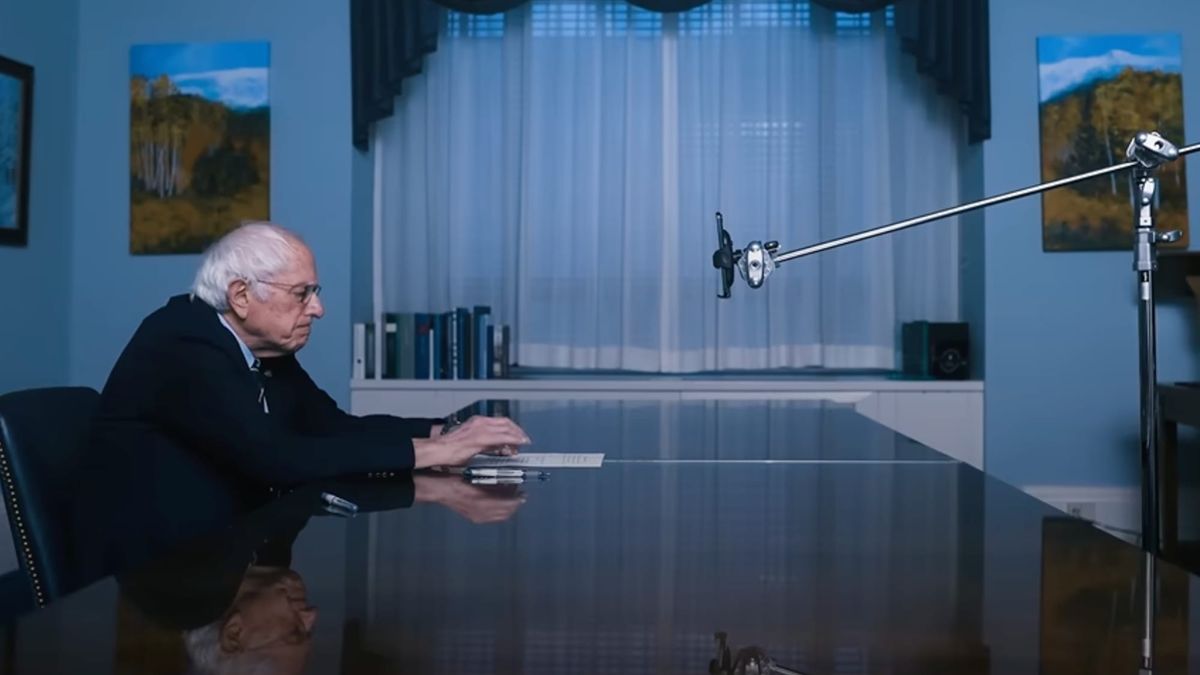
While Sanders has done admirable work bringing attention to the issue of data centers, his conversation with Claude showed that the senator does not ultimately have a good enough grasp of AI—and that has consequences for how he approaches it.
Part of the problem is that Sanders’s policy approach to AI has been a direct response to the exaggerated claims made by AI companies about their products. By now you’ve probably heard many of them: that AI is going to eradicate vast numbers of jobs, will be societally transformative on a scale we’ve never seen before, and could even gain sentience and turn on humanity.
You can see this in Sanders’s rhetoric. In a New York Times opinion piece published in June, he opened by echoing the industry’s narratives. “Artificial intelligence will almost certainly be the most transformational technology in the history of the world,” he wrote. “It will profoundly affect the life of every man, woman and child in our country.” For Sanders, the focus has become about making sure workers are not displaced by the technology and that the public shares the wealth it creates, as he argues for a policy to put a 50 percent one-time tax on the stock of large AI companies.
But what if that is not the reality of generative AI? Chatbots and image generators are not the economic and social revolution that tech billionaires insist they are. In 2024, author Ted Chiang called them “autocomplete on steroids,” and that’s a good way to understand them. We’re dealing with AI models trained on immense amounts of data and using unimaginable quantities of computation to produce text and images that are designed to seem as though they come from humans, but are really just pulling from a vast repository to best match the prompt they’re served.
It’s exactly why the “hallucinations” cannot be engineered out of the technology. As OpenAI’s own researchers admitted last year, they’re a feature, not a bug, of generative AI. That’s because there is no understanding or thought happening behind the prompt box on a chatbot. It’s just looking for the parts of its dataset that best match the query it’s given.
There’s also growing evidence that the supposedly transformative productivity and efficiency gains AI companies promised are not materializing. Businesses are in the process of pulling back on their AI spending because they aren’t seeing a return on investment, and it’s quite clear that in many cases bosses are using the excuse of AI to lay off workers so they can cut costs—not because AI is really replacing those jobs.
Having the American public become bagholders for Sam Altman is an amazing idea.