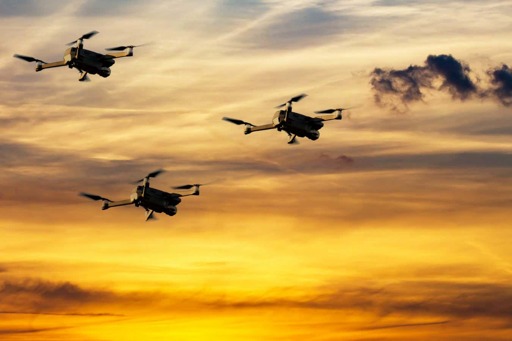
A senior figure in the Ukrainian defence industry told New Scientist that a test took place two years ago involving fully autonomous drones set to destroy anything in a given area, with confirmed casualties
Weapons have been banned before, but nukes are the only things that actually don’t get used.
Well, you don’t hear a lot about blinding weapons or biological agents these days.
You could have looked at the first muskets and said "definitely an advantage, but not an insane amount compared to seasoned archers and siege equipment.
Like, both drones and muskets are real, game-changing innovation, but how they effect the geopolitical equilibrium is a complicated question. I’m reminded of some of the WWI-era designers who though a more deadly weapon would mean a shorter, more humane war. In practice it meant a very different, long-standoff battlefield, and a much slower war.
To that point:
These are cheaper to create, easier to run in undetected, and do far far less collateral damage.
Shells are really cheap, like as cheap or cheaper than a drone, undetectability is valid, but actually favours the little guy, and collateral damage depends. Some shrapnel marks on one hand vs. a localised explosion on the other. You don’t want to shell a big thin-walled tank or pipe, but on a normal building the drone may actually be more destructive.
So basically, this is an interesting development and different from a shell for sure, nobody’s denying that. But, that it favours central, autocratic power does not directly follow.
you don’t hear a lot about blinding weapons or biological agents
Blinding agents aren’t that effective in warfare. Chemical agents do get used, especially on civilians. Biological weapons are a big risk relative to much more tested, targeted, conventional munitions. At the end of the day, flying an explosion at the other guy has always been the winning strategy, and still is to some extent.
The age of absolutism gave way to the age of revolution.
Ah yes, when you could drop off a few boxes of guns to some revolutionaries and they would be near untrackable in dense urban or wide rural settings.
Now, your revolutionary drone operator saves you the trouble of tracking by broadcasting his location, assuming he hasn’t already been sighted on your universal surveillance cameras or been swept up by irregular purchasing habits.
Shells are really cheap…
By dollars per kill, drones blow them out of the water. You need a big, pricey, vulnerable piece of machinery to target your shells. Your target will more than likely move or take a covered position once the shells drop. And obviously you need a spotting system for this as well (probably a drone anyway).
On average, for your light artillery it might take 8-10 shells to kill a target. That’s why they’re not precision killing equipment and are better used for flattening defenses or pinning down groups of people.
A drone just needs some piloting, human or otherwise. So you’re comparing 10 shells from a trained team out of specialized firing position with a calibrated gun vs. one guy with two drones in a backpack.
So when you stack up any belligerents [state vs state/non-state], the key math is who can deploy more drones from better positions with better range/targeting, better tactical intelligence and keep pressure over a longer period. A state actor will always have the advantage there.


Well, you don’t hear a lot about blinding weapons or biological agents these days.
That’s a great example. You know what happened after muskets fully took over? The age of absolutism gave way to the age of revolution.
Like, both drones and muskets are real, game-changing innovation, but how they effect the geopolitical equilibrium is a complicated question. I’m reminded of some of the WWI-era designers who though a more deadly weapon would mean a shorter, more humane war. In practice it meant a very different, long-standoff battlefield, and a much slower war.
To that point:
Shells are really cheap, like as cheap or cheaper than a drone, undetectability is valid, but actually favours the little guy, and collateral damage depends. Some shrapnel marks on one hand vs. a localised explosion on the other. You don’t want to shell a big thin-walled tank or pipe, but on a normal building the drone may actually be more destructive.
So basically, this is an interesting development and different from a shell for sure, nobody’s denying that. But, that it favours central, autocratic power does not directly follow.
You are an incredibly optimistic summer child.
Blinding agents aren’t that effective in warfare. Chemical agents do get used, especially on civilians. Biological weapons are a big risk relative to much more tested, targeted, conventional munitions. At the end of the day, flying an explosion at the other guy has always been the winning strategy, and still is to some extent.
Ah yes, when you could drop off a few boxes of guns to some revolutionaries and they would be near untrackable in dense urban or wide rural settings.
Now, your revolutionary drone operator saves you the trouble of tracking by broadcasting his location, assuming he hasn’t already been sighted on your universal surveillance cameras or been swept up by irregular purchasing habits.
By dollars per kill, drones blow them out of the water. You need a big, pricey, vulnerable piece of machinery to target your shells. Your target will more than likely move or take a covered position once the shells drop. And obviously you need a spotting system for this as well (probably a drone anyway).
On average, for your light artillery it might take 8-10 shells to kill a target. That’s why they’re not precision killing equipment and are better used for flattening defenses or pinning down groups of people.
A drone just needs some piloting, human or otherwise. So you’re comparing 10 shells from a trained team out of specialized firing position with a calibrated gun vs. one guy with two drones in a backpack.
So when you stack up any belligerents [state vs state/non-state], the key math is who can deploy more drones from better positions with better range/targeting, better tactical intelligence and keep pressure over a longer period. A state actor will always have the advantage there.