cross-posted from: https://mander.xyz/post/46106815
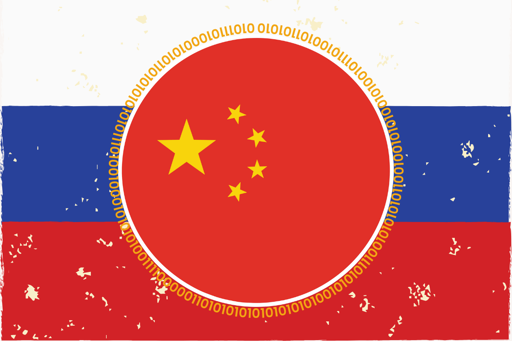
Recent disclosures that a Chinese cyber-espionage group known as APT31 has quietly penetrated Russian technology firms for years should reshape how Europe understands the China–Russia relationship.
…
Chinese actors reportedly gained deep access to Russia’s defence-adjacent technology sector, but Moscow appears unwilling to confront Beijing publicly. That silence says more about the state of the partnership than any official communiqué.
For years, Beijing and Moscow have cultivated the narrative of a ‘no-limits’ strategic alignment. But this curated image obscures a more complex reality. Viewed through the longer lens of territorial disputes, competition in Central Asia, and resentment over historical ‘unequal treaties’, the relationship looks less like an alliance and more like a temporary convergence of interests sitting atop a mountain of mistrust.
The APT31 hacking case fits squarely into this pattern. Chinese actors reportedly maintained long-term access to Russian companies involved in government contracting and systems integration, precisely those closest to Russia’s critical infrastructure and defence industry. Beijing did not hesitate to target sensitive sectors, yet Russia avoided naming China directly in its public disclosure. This illustrates the stark asymmetry in their partnership. China is confident enough to probe Moscow’s technological ecosystem, while Russia is cowed enough to downplay the intrusion rather than risk a diplomatic rupture.
…
Beijing’s support for Moscow is often perceived as unwavering, but in practice it is highly conditional. China backs Russia to the extent that the war distracts the West, drains NATO stockpiles and increases Moscow’s reliance on Chinese industrial and technological outputs. At the same time, Beijing has been careful to avoid provoking secondary sanctions that could damage its own economy, while remaining wary of moves that could destabilise Eurasia or Russia’s internal cohesion. Both scenarios would impact China’s long-term strategic interests, including in Russia’s far east.
…
This hacking episode is a reminder that the China–Russia partnership is uneven and constantly renegotiated. That gives Europe more room to manoeuvre than it often assumes. To use that space, European leaders must identify where China’s interests are most vulnerable and where the seams in the relationship can be found. China’s willingness to sustain Russia while simultaneously surveilling and constraining it underscores a partnership that is conditional, asymmetric and less durable than rhetoric suggests.
…
How is this different from US spying on the EU?
https://en.wikipedia.org/wiki/German_Parliamentary_Committee_investigation_of_the_NSA_spying_scandal
The people that spread division and hate throughout the world find it difficult to unite with each other?
Russia’s power exports to China halted amid energy price dispute
- China has stopped importing electricity from Russia as of January 2026, marking the first time Russian export prices exceeded China’s domestic rates, making purchases economically unviable.
- The dispute mirrors stalled negotiations over Russia’s proposed Power of Siberia 2 gas pipeline, where China demands discounts while Russia seeks favorable terms amid Western sanctions and lost European markets.
- Despite political alignment, both nations prioritize domestic economic needs, revealing China’s strategy of securing cheap energy while maintaining negotiation leverage—highlighting cracks in their “no limits” alliance.
In other news, water is wet.