
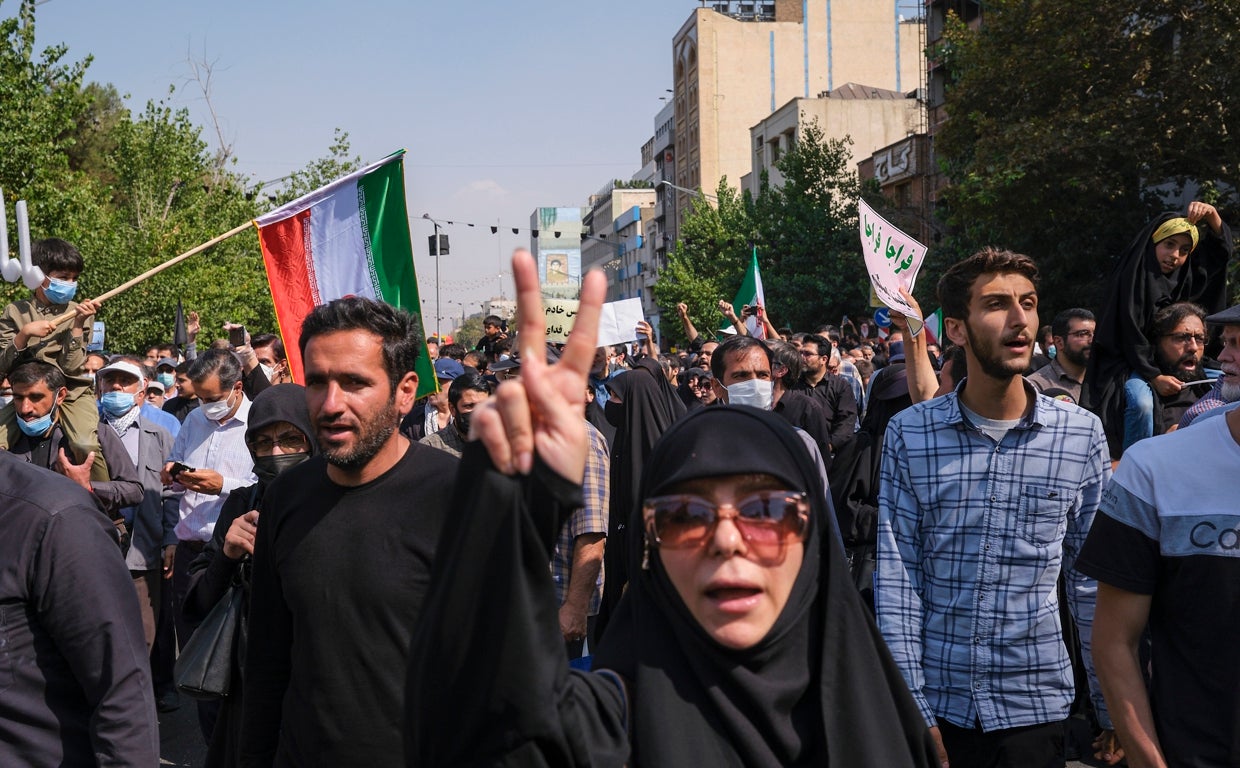
During the 2026 World Economic Forum in Davos, US Treasury Secretary Scott Bessent declared that the “maximum pressure” policy ordered by President Trump led to the collapse of the Iranian economy, causing a dollar shortage and street protests, which he described as a successful exercise in “the art of economic governance.” “We collapsed the Iranian economy so that people would take to the streets; it’s economic policy without a bullet,” Bessent stated.
He asserted that the sanctions deliberately seek to destabilize the economy to provoke social instability, a strategy he described as coercion “without firing a single shot,” and directly linked the sanctions-induced economic crisis to the mass protests that began in December 2025, when the rial hit historic lows.
The Iranian rial depreciated by more than 20% in a single month (December 2025) and has lost more than 80% of its value in a year, reaching a rate of around 1.47 million rials per dollar. The United States’ methods for bringing about the collapse of the Persian economy have consisted primarily of isolating Iran from the global financial system, blocking its oil export revenues, and restricting its access to foreign currency reserves.
This has led to a severe dollar shortage, triggering uncontrolled money printing by the central bank to finance the deficit and completely eroding confidence in the national currency. This monetary crisis exacerbated inflation that was already exceeding 42% (with food prices rising by 72%), prompting thousands of Iranians to protest the economic situation.
While Bessent’s statements have a certain triumphalist and “all-powerful” tone that needs to be qualified, the truth is that the so-called “revolution” of these weeks was ignited from a deliberate strategy, where extreme economic tools were used with the intention of structurally weakening the Iranian state and bending its political will.
Given this prospect, many publishers—with a wide range of ideological biases—have already rushed to predict the end of the Islamic Republic without any real contextual analysis. We say this because making such a claim denies that Iranian society has been accustomed to a resistance economy for decades.
When the United States disconnected Iranian banks from the SWIFT system and threatened secondary sanctions against any buyer of its oil, the objective was clear: to reduce the Islamic Republic’s vital revenues to zero. The thesis of absolute financial power seemed unassailable. However, life (economic and political) finds a way. Iran did not passively endure the blockade; it began to weave a network of evasion and resistance that constitutes a true antithesis to the siren songs of both imperialism and Western progressivism.
To maintain the flow of its oil, Iran deployed what analysts call a “ghost fleet.” These are veteran tankers that sail with their transponders turned off, conduct offshore transfers, and frequently change flags and names. This clandestine system, though risky and costly, has allowed Iran to maintain a significant volume of exports. The main destination: China, which now buys nearly 90% of Iranian crude at a discounted price, becoming Tehran’s economic lifeline.
Western pressure acted as a geopolitical magnet, irrevocably drawing Iran closer to America’s strategic rivals. With Russia, the relationship has evolved from tactical cooperation to a strategic military alliance: Iran supplies Shahed drones, which have been crucial on the Ukrainian front, and in return, Moscow provides advanced military technology, such as Su-35 fighter jets, and cooperates on Iran’s civilian nuclear program. Together with China, they form an alternative power triangle, conducting joint military exercises and protecting each other in the UN Security Council.
Within the country, the population and even state institutions have turned to modern tools to survive the sanctions. Bitcoin and cryptocurrencies have become popular not only as a store of value for citizens who see their savings in rials evaporate, but also as a channel for the Islamic Revolutionary Guard Corps (IRGC) itself to conduct international transactions outside the reach of the traditional banking system.
The economic war has not broken Iran; it has strengthened its resolve and integrated it more deeply into the political order from which the United States sought to extract it.
If Iran wants to put an end to these economic woes then it needs to stop treating western economic theory as some kind gospel. Privatization and the refusal to harshly control Iranian capitalist’s power allows for a breach in Iran’s sovereignty.
The reformists who still follow neoliberal economic doctrines need to be treated as traitors in the economic war, and complete dedollarization must be pursued.
I hope that the Iranian state will take these measures into consideration because right now it’s leaving itself open dud to the greed of a a few wealthy oligarchs who’d rather profit off of their people rather than secure the country’s sovereignty.
I hope they do change. Also, I heard some rumors that Hassan Rouhani & Javad Zarif, extreme reformists, have been arrested so if this is true then maybe a wave of change might happen.
I’ve also heard reports of Rouhani being under house arrest but I’ve yet to see anything more substantial.
