

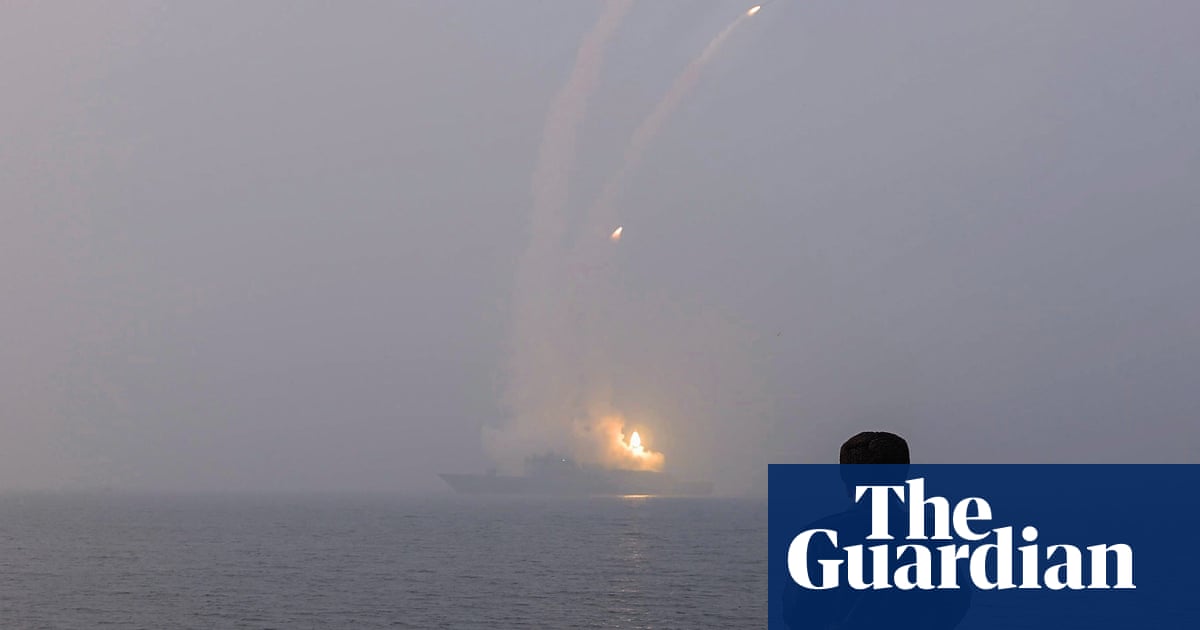
As speculation mounts that Kim Jong-un and Trump could meet this month, analysts say Pyongyang will continue to see nuclear weapons as a matter of survival
North Korea’s launch last week of a missile from a naval destroyer elicited an uncharacteristically prosaic analysis from the country’s leader, Kim Jong-un. The launch was proof, he said, that arming ships with nuclear weapons was “making satisfactory progress”.
But the test, and Kim’s mildly upbeat appraisal, were designed to reverberate well beyond the deck of the 5,000-tonne destroyer-class vessel the Choe Hyon – the biggest warship in the North Korean fleet.
His pointed reference to nuclear weapons was made as the US and Israel continued their air bombardment of Iran – a regime Donald Trump had warned, without offering evidence, was only weeks away from having a nuclear weapon.
The UN was never a guarantor of peace. It was an effort to provide a forum for diplomacy to facilitate peaceful solutions, created in a time where international relations were much more fragmented.
Diplomacy can never prevent war, only ever seek to avoid it, and that’s what the UN is for. It’s not any member’s extended army to enforce their idea of peace. That’s why the great powers got veto rights: to prevent weaponising it.
This isn’t on the UN. It’s on the aggressors that start wars and prove that you cannot trust in international goodwill and a shared desire for peace.
The great powers got veto rights for them to participate at all in it and for them to be able to do as they please in the future. I don’t think “weaponising” is the correct framing because from the point of view of probably pretty much everyone else other than them (and of course even for them when it comes to the other ones) it would absolutely be a good thing if the UN was able to limit their actions too. The people who came up with the whole concept of international law certainly would not have preferred this situation where the law is not the same for everyone, it’s against the basic principles of rule of law.
Yes, of course. But what would the alternative achieve? If a great power decides to defy a (binding) resolution, how would the others enforce it? Bear in mind that client states or otherwise allied nations wouldn’t want to intervene against their masters or allies. You’d either end up splitting the UN, at which point it’s no longer United, or form alliances outside of it, like the sanctions against Russia (which not everyone implemented either).
International law (like any other law) only works if it is either respected or enforced. Criminal cartels also defy the law, and if they’re powerful enough to resist enforcement, the law might as well not apply to them.
So yes, this isn’t how law should work, but power corrupts a lot of things, the rule of law included.
I’m not saying this state of affairs is good. Reality often isn’t, and I wish it were.